MBA in entrepreneurship for 32 consecutive years
– U.S. News & World Report
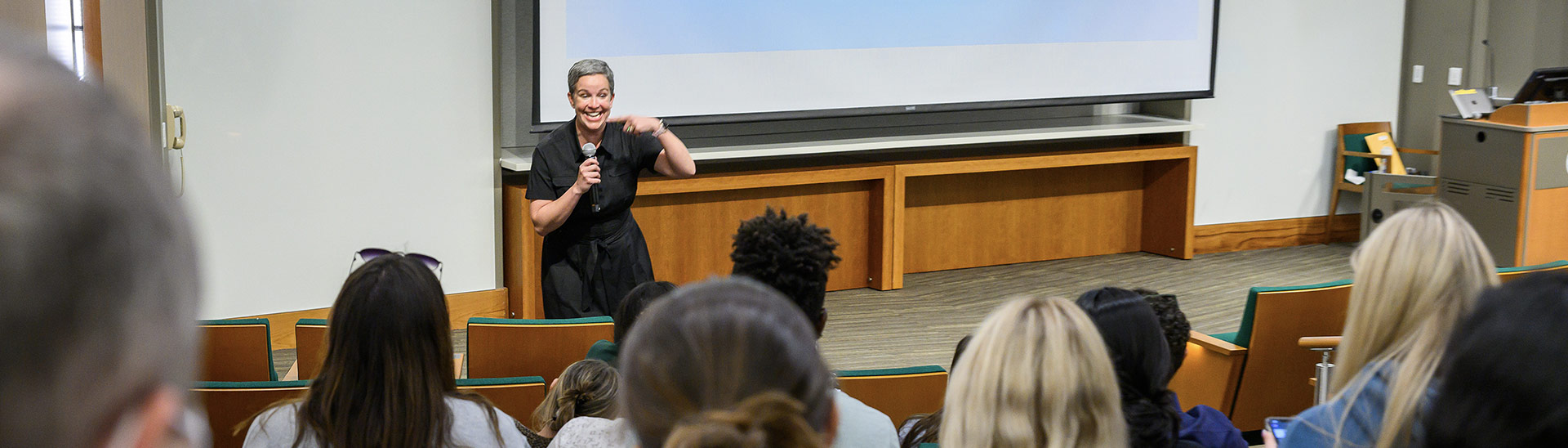
Whether you want to start a new venture, switch careers, or advance in your current organization, Babson’s one- or two-year MBA program will help you get there. Both options feature MBA classes that will arm you with the leading MBA for entrepreneurship and the entrepreneurial leadership skills needed to make an impact in business, in your community, and around the world.
– U.S. News & World Report
– The Princeton Review and Entrepreneur magazine, 2026
– The Wall Street Journal, 2026

Watch: A Babson MBA is more than a degree—it’s a personal transformation. Hear how students grow through challenge, community, and co-learning with faculty. From balancing parenthood to discovering new ambitions, this story reflects the supportive, entrepreneurial environment that helps students lead with confidence and purpose.
At many top institutions, lectures don’t move past the lectern. But, at Babson, the leading entrepreneurship college, our professors are practitioners. Each year, more than 80 partner organizations bring their real-world challenges to class, providing you with a wide range of consulting opportunities. You’ll meet with established business leaders locally and abroad, all while workshoping your startups in the classroom.
When you graduate, you not only have an expanded network of high-performing peers from around the world, but you also have tangible examples of problems you’ve solved for real organizations thanks to our MBA classes and Babson’s top-ranked entrepreneurial curriculum. Whether you want to launch a startup, take a family business into the next generation, or innovate within the world’s largest companies, you can apply your entrepreneurial mindset to manage risk, navigate uncertainty, and explore ambiguity.

Babson College is accredited by the Association to Advance Collegiate Schools of Business (AACSB)
Learn more about our accreditations
Two STEM-designated concentrations allow international students to apply for 36 months of OPT vs. 12 months of OPT for students in non-STEM programs.
The Babson MBA is 45 credits whether you opt to complete it in one or two years. All full time MBA students earn their first 15 credits via the nine core courses, including real-world learning. One-year MBA students complete the program in 12 months, while two-year MBA students earn their MBA in 21 months.
The rest of your full time MBA program consists of electives. Choose the MBA classes that appeal to you, or select your MBA classes from seven concentrations and intensity tracks, with additional experiential learning opportunities, all to enable you to focus on areas of interest. Our small size means that students, faculty, and career advisors co-create a tailored experience that helps each student achieve their professional goals.
Leading Through Opportunity and Design
Leading Through Innovation and Growth
Babson Consulting Experience
Specialize and build skills in a variety of areas, including:
Experiential learning is part of Babson’s DNA: More than 80 partner organizations bring their real-world challenges to class. Students consult with client companies, meet with business leaders locally and abroad, and workshop their startups in the classroom. Here are some of the signature experiences you can look forward to during the Babson MBA:
Combine learning inside and outside the classroom. Intensity tracks, typically a series of courses, provide additional opportunities for experiential learning.
Seven concentrations allow you to specialize in specific academic areas, including:
With Babson’s Full-Time MBA, you have the flexibility to pick and choose from more than just electives, concentrations, and intensity tracks. You’re also able to select the pacing that works best for you and your schedule. Discover the main differences between Babson’s one and two year MBA programs:
| One Year | Two Year | |
|---|---|---|
| Duration | 12 months | 21 months |
| Pace | Take electives over 2½ semesters | Take electives over four semesters |
| Summer | Take a full course load | Land internships, take classes, and participate in Babson’s startup accelerators |
| Start Date | May | Late August |

Babson’s graduates are known for their ability to navigate uncertainty, drive innovation, and lead within organizations both large and small. We are thrilled to share the job landings for the MBA and Specialized Masters Class of 2025.
View Dashboard
Babson’s MBA program provided me with new lenses, frameworks, and practical applications to look at problems from a variety of perspectives and a constant reminder that solutions are forever evolving.
Babson’s Entrepreneurial Thought & Action® methodology prepares you to become an entrepreneurial leader so you can address the greatest challenges of business and society, including innovation, growth, integrated sustainability, and globalization. Whether you’re making an impact within an established organization or starting your own venture, your increased self-awareness, expanded mindset, and refined skill set will allow you to create both economic and social value.
This experience is guided by four learning goals.
Collaborate with and learn from others to accomplish a common goal or create an original work.
Lead people to work toward shared goals with consideration of the ethical implications of their actions.
Develop and express ideas strategically, through written, oral, and visual formats, to a specific audience for a desired purpose.
Analyze and assess ideas and data to make decisions and recommendations appropriate to situations and stakeholders.
Diverse backgrounds and experiences make our environment richer and help us acquire new ways of working. Learning alongside students from all over the world and with varying levels of career experience, you’ll gain exposure to unique perspectives that strengthen your own. And, because you take your core courses with your cohort, you and your classmates form strong, lifelong connections.
After Babson, the global network of 46,000+ alumni across 128 countries will have your back throughout your career.
Women
International
Domestic students of Color
Average years of work experience
Work experience range (years)
Women
International
Domestic students of Color
Average years of work experience
Work experience range (years)
Whether it's launching a venture, changing industries, or accelerating your career, a Babson degree will help you move from where you are to where you want to be.
Full Time MBA alumni are making an impact across organizations and industries. Employers hiring full time MBA program graduates include Accenture, Boston Children’s Hospital, CVS Health, Deloitte, Examity, Huntington National Bank, Ocean Spray, Partners Healthcare Innovation, PwC, Sensata Technologies, Staples, Vertex Pharmaceuticals, and more.
median starting salary (of U.S.-based landings), 2025
MBA Students who accepted a job offer 6 months after graduation, 2025 (of those seeking)
MBA students who are working on their own venture, 2025

Create lasting change within your organization or throughout your industry at large. Form the skills you need to address today’s major business challenges through evidence-based practice in this three-year blended program for executive-level professionals.
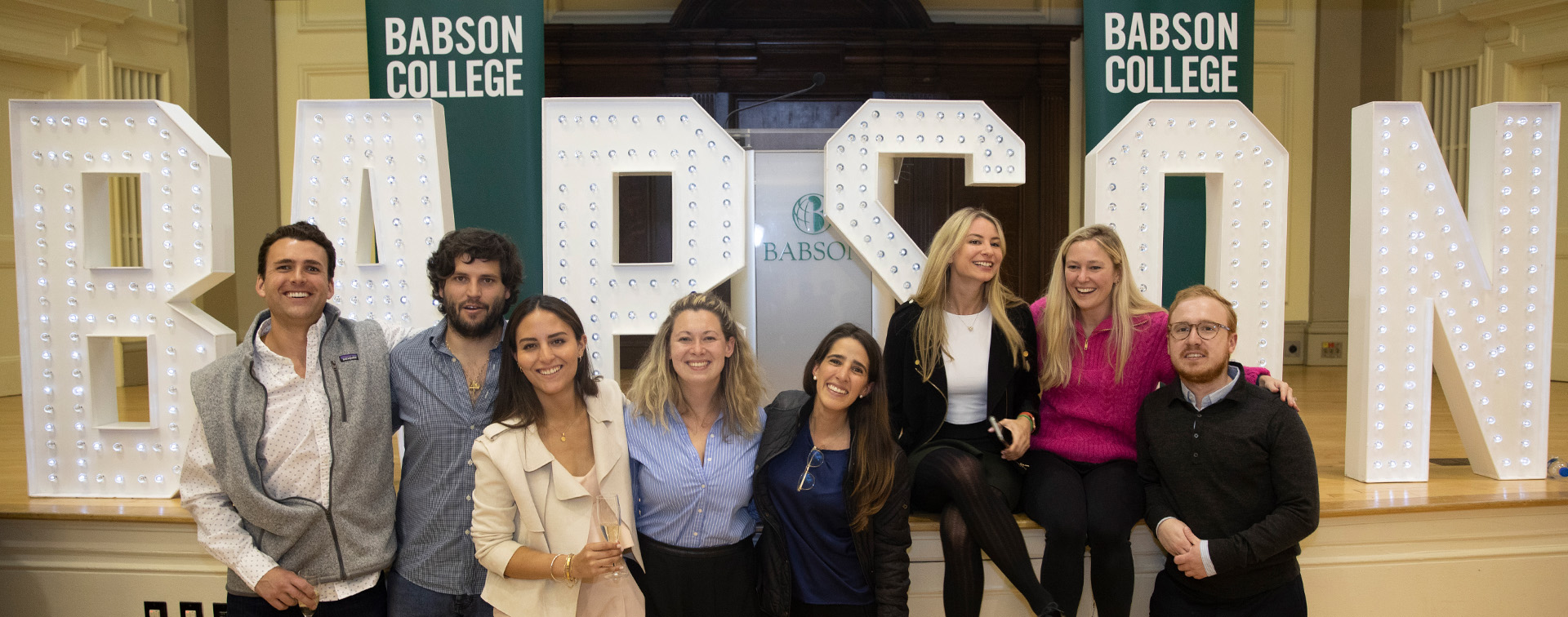
Professional growth happens just as much outside the classroom at Babson as it does inside. Join one of 25+ student-run organizations—hold a leadership role or join as a member. Pitch your business idea (with $100K on the line) during ePitch, help organize signature Babson events that bring world-class speakers to campus, or get involved with Babson’s renowned centers and institutes.
Explore Student Life
Initially I sought Babson because of its highly regarded reputation in entrepreneurship. What sold me was the community. I came for a visit, sat in on a class, had lunch with professors and students, and immediately realized that they were the kindest, most diverse group of people and personalities I had ever been around. I wanted to experience more of that and get a phenomenal education on top of it.
We’ve collected our best graduate school advice to help make the process of deciding between programs a little easier.

In a word: yes. But ultimately, the decision is a personal one. See what Harvard Business Review, The Washington Post, and others have to say about the value of this degree.

Pursue the right advanced business degree for your career goals. The decision often depends on years of professional experience, if you want to change career paths, and more.
With small class sizes, hands-on learning opportunities and customizable degrees, you’ll be able to get from where you are to where you want to be. Start or continue your application at Babson today.