
Police Accreditation, Training, and Standards
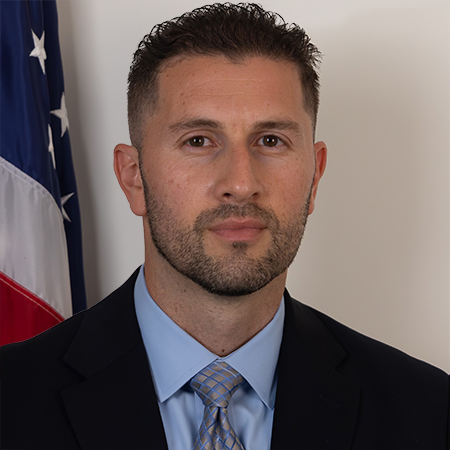
Jose Grajales
Administrative Sergeant
781-239-4511
jgrajales@babson.edu
The Administrative Sergeant is primarily assigned to support the Patrol Lieutenant and Command Staff in the day-to-day operational management of areas within the department such as shift assignments/scheduling/details, training coordination, operational planning and Accreditation management. IT is the Administrative Sergeants responsibility to maintain familiarity with all applicable laws and the policies and procedures of the Department of Public Safety and with the rules and regulations of Babson College. Acting as a resource for Officers and Community Service Officers and providing guidance to other supervisors as it relates to staff responsibilities is also under the direction of the Administrative Sergeant.
It is important for the Administrative Sergeant to assist the Command Staff with the development, review, and implementation of policies and procedures for the department, specifically regarding compliance requirements while acting as the primary State Accreditation Manager
The Administrative Sergeant acts as a member of the supervisory and management team of the Department of Public Safety and as such is expected to devote themselves to promoting the fulfillment of the mission and values of the Department of Public Safety among those they supervise and serve.
Contact Us


REPORT POTENTIAL THREATS
If imminent or involves violence, call Babson Police @ 781-239-5555. Other reporting options include emailing publicsafety@babson.edu or calling our anonymous tip line @ 781-237-8164.
What is Police Agency Accreditation?
Accreditation is a self-initiated process by which police agencies voluntarily strive to meet and maintain standards that have been established for the law enforcement profession by the profession. The program establishes standards on best practices for police agencies to adopt. Agencies then establish written directives and procedures for their personnel to implement. Standards dictate which topical areas an agency must have policies and procedures, leaving the agency’s chief executive officer and supervisory staff to develop and enforce agency-specific policies and procedures. Most of the Commission’s standards require agencies to commit their often-unwritten policies and procedures to writing. Achieving Accreditation means that the agency has agreed to adopt our program’s standards as a way of doing business.
That said, being accredited means that the agency is:
- Committed to meeting professional standards;
- Willing to be assessed on a regularly scheduled basis by Commission-appointed assessors to confirm compliance with professional standards; and
- Agrees to correct any deficiencies discovered during the assessment process to establish or re-establish compliance with program standards.
