Babson College home Centers & Institutes
Campus Stewardship

Infrastructure/Campus Stewardship

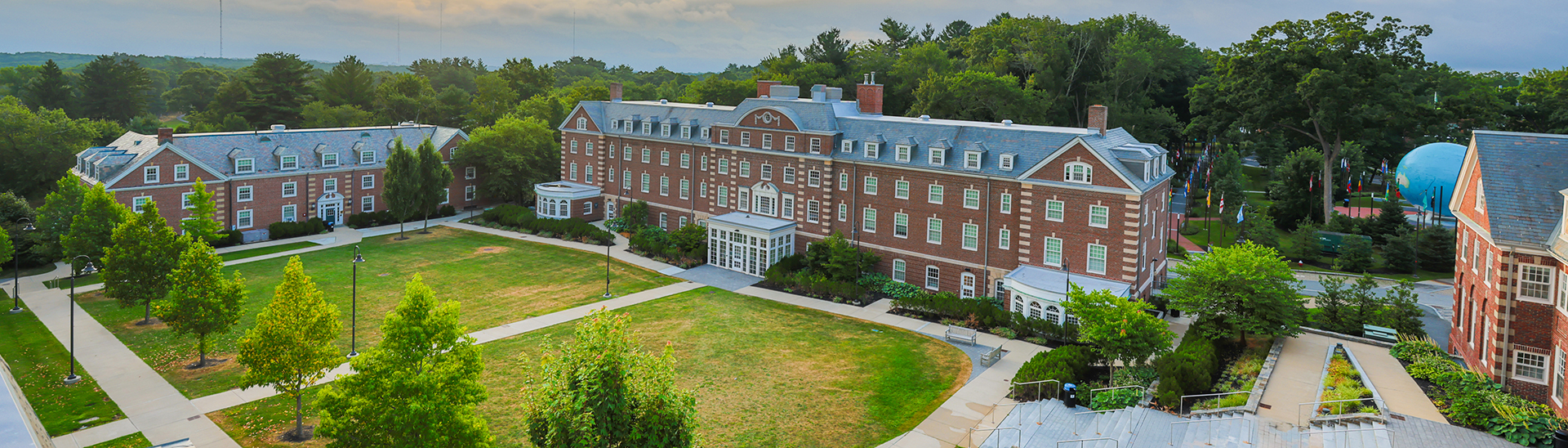
At Babson College we are dedicated to fostering a sustainable and environmentally responsible campus.

Our commitment to sustainability is reflected in our efforts to enhance energy efficiency, reduce waste, and incorporate sustainable building practices in both new construction and renovations. We believe that a sustainable campus is not only essential for our environmental impact but also vital for the well-being of our community.

Key Initiatives

Through these initiatives, we strive to create a more sustainable and responsible campus environment. We invite you to join us in our commitment to stewardship and sustainability, as we work together towards a greener future.

Sustainable Infrastructure

We are implementing comprehensive strategies to upgrade our campus infrastructure. This includes energy-efficient lighting, HVAC systems, and water-saving technologies. Our waste reduction initiatives focus on recycling, composting, and minimizing single-use plastics. Additionally, all new buildings and major renovations are designed to meet high sustainability standards, prioritizing eco-friendly materials and energy-efficient designs.

Update Climate Action Plan

We are committed to transparent reporting and continuous improvement, tracking our progress to ensure we meet our targets and contribute to a healthier planet.

Renewable Energy Exploration

To further reduce our environmental footprint, we are exploring renewable energy options and emerging technologies.

Sustainable Transportation

We encourage our community to adopt sustainable transportation methods. Our initiatives include installing electric vehicle charging stations, ride-share options and offering incentives for using public transit. These efforts not only reduce emissions but also promote a healthier lifestyle for students, faculty, and staff.

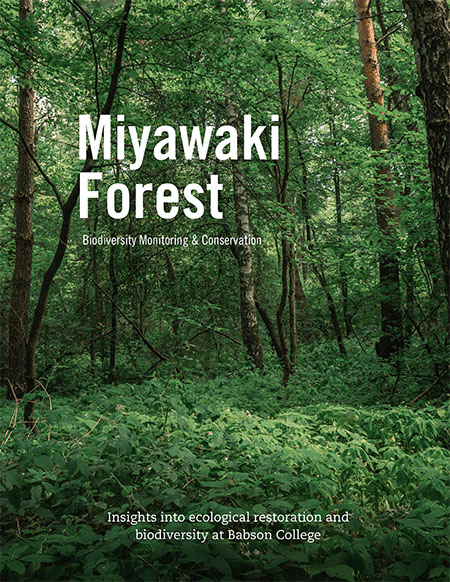
Miyawaki Forest Guide Cover

What is a Miyawaki Forest?

A Miyawaki Forest is a densely planted native woodland designed to accelerate natural forest development. Developed by Japanese botanist Akira Miyawaki, the method uses a diverse mix of locally native trees and shrubs planted much closer together than in conventional landscaping. This density encourages competition for sunlight, promoting rapid vertical growth while creating a multilayered forest structure. Once established, Miyawaki forests require minimal maintenance, and provide ecological benefits such as carbon sequestration, stormwater management, urban cooling, and habitats for wildlife.

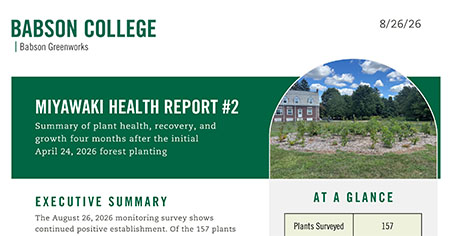
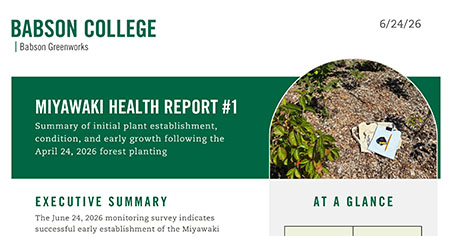
The Babson College Miyawaki Forest is a high-density planting of native New England trees and shrubs, such as black oak, chokeberry, serviceberry, red maple, blueberry, yellow birch, white pine, and more. Using the Miyawaki method, over 150 plants and shrubs were planted on Earth Day 2026 (April 24). The forest is expected to establish rapidly, developing into a self-sustaining ecosystem within 2-3 years of planting. The forest is supported daily by our Grounds department and bimonthly health surveys are conducted by the Babson Greenworks team. This report contains those findings.
Soft Plastics Recycling

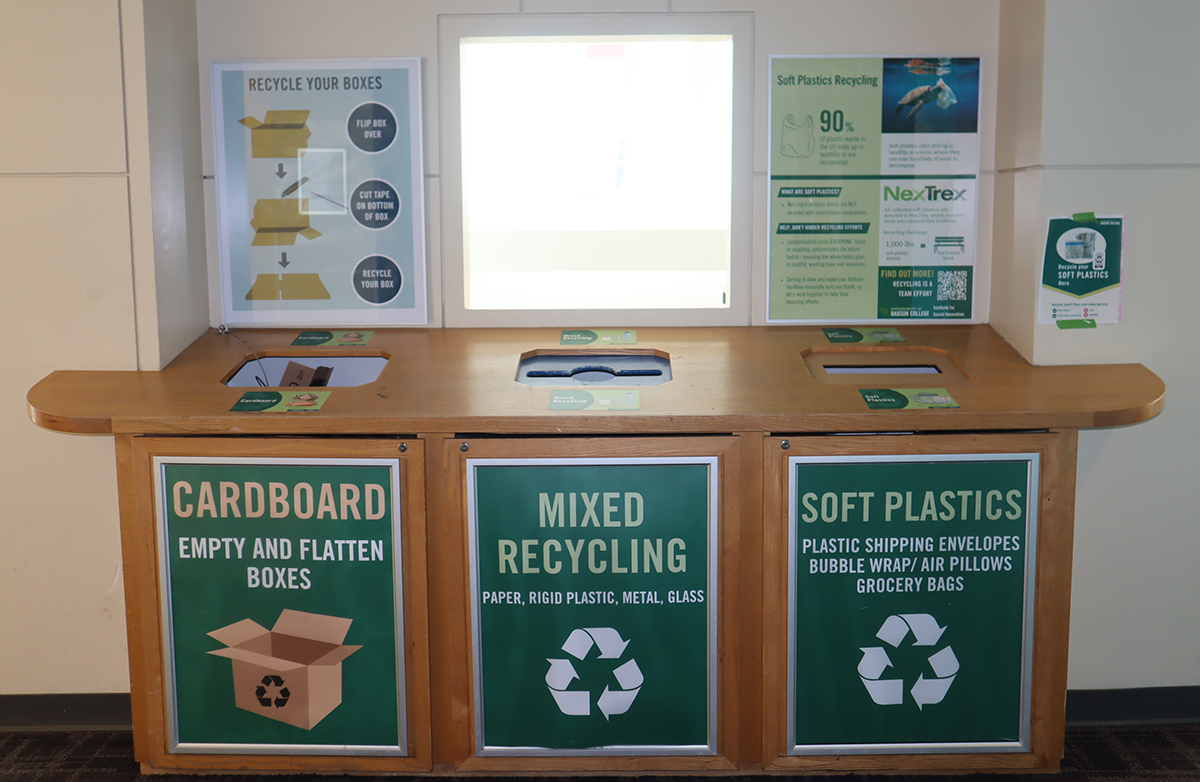
  1. Soft plastics are dropped off in the bin by the mail room by students.
  2. Sustainability interns collect the soft plastics and drop them off to be recycled by NexTrex.
250+

Since the launch of the soft plastics bin in Fall 2024, 250+ soft plastics have been collected.

Recycling On Campus
What Can Be Recycled
Receptacle Dimensions

Contact Babson Greenworks


By submitting this form, you agree to receive communications from Babson College and our representatives about our educational programs and activities via phone and/or email. You can unsubscribe at any time by clicking Unsubscribe from an email.

Sustainability is always evolving. We, as a community, work together to define what Babson Greenworks is and what it needs to be in the future—we welcome any and all feedback.